

Nanooncology
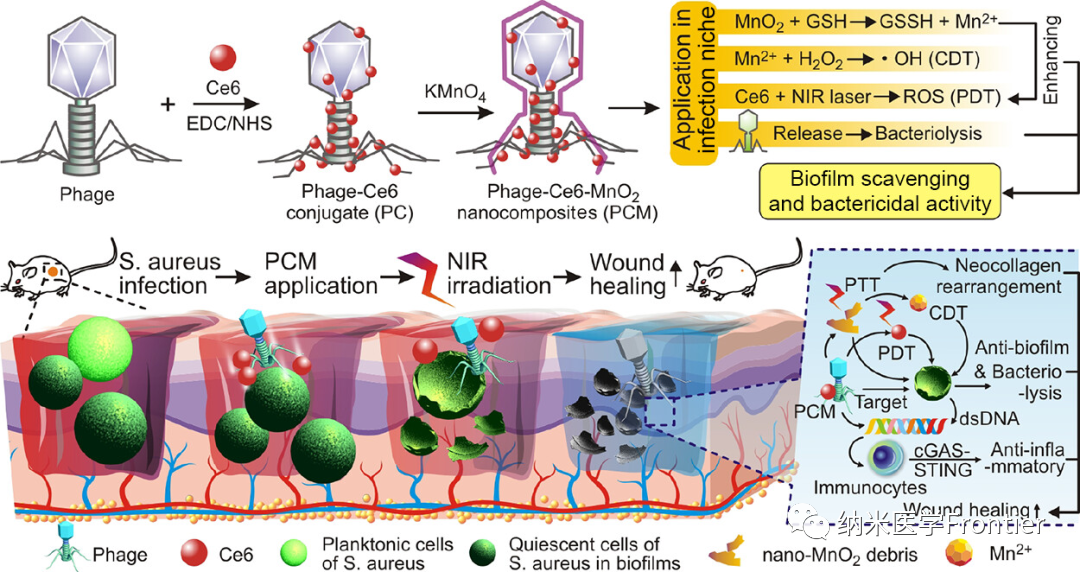
pH/GSH response to Ce6/MnO2 for PTT/CDT therapy
Biofilms have become one of the fundamental problems of chronic infection, and conventional therapies are often ineffective in removing quiescent (persistent) cells in biofilms, leading to various implant-related or infections.
Phage therapy, a method of using bacteriophages to infect and kill bacteria, has some limitations, such as not being able to penetrate biofilms effectively.
The researchers prepared a complex of phage and nanomaterials, which can target bacteria, release reactive oxygen species and metal ions, and generate photothermal and chemokinetic effects, thereby enhancing the effect of phage therapy.
Experimental results showed that this complex can reduce bacterial infection in the body, activate the immune system, promote wound healing and reduce scarring. This provides a new strategy for bacterial therapy.
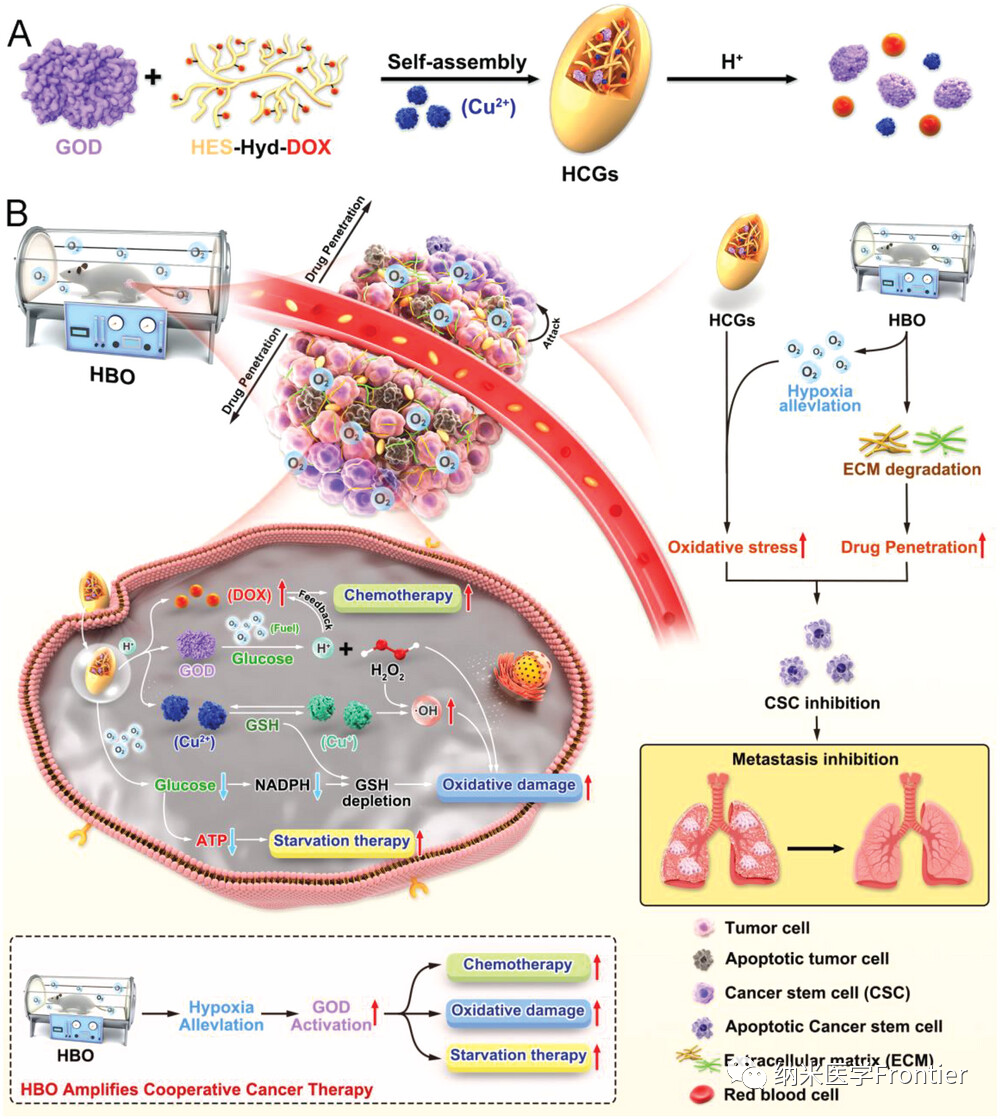
pH-responsive Cu-GOD tumor therapy
Tumor starvation is a method to suppress tumor growth by depleting intratumoral glucose, but there are several challenges, such as tumor hypoxia, insufficient drug delivery, and side effects. Based on this, the researchers designed a nanobioreactor based on starch prodrugs, copper ions, and glucose oxidase, which can release reactive oxygen species and drugs in tumors with the help of hyperbaric oxygen, thereby enhancing the effect of tumor starvation.
Experimental results show that the combination of this nanobioreactor and hyperbaric oxygen can effectively inhibit the growth and metastasis of breast cancer in situ by depleting glucose and inducing oxidative stress. This provides a new strategy for glucose oxidase-based therapy.
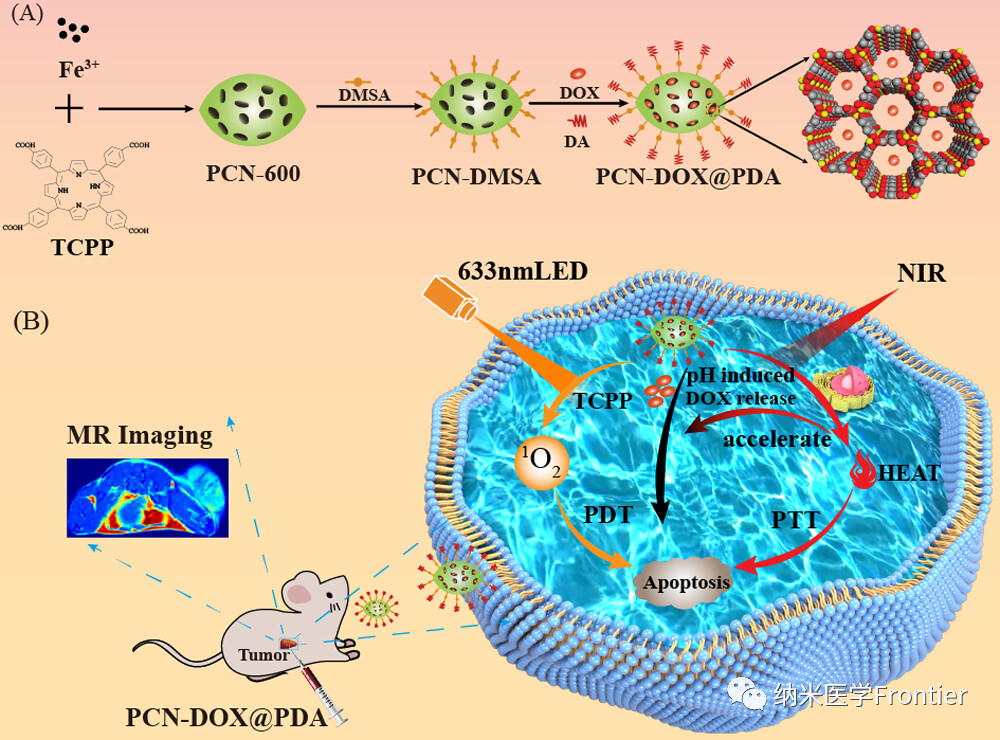
pH/NIR responsive PCN-DOX@PDA integrated diagnosis and treatment
The intelligent response drug delivery system is a method that can release drugs according to changes in the tumor microenvironment, which can improve the precision and effect of tumor treatment.
The researchers prepared a metal-organic framework (PCN), dopamine (PDA), and porphyrin (TCPP)-based nanoplatform, which can produce photothermal and photodynamic effects and simultaneously release anticancer drugs (DOX) under the action of near-infrared laser light.
Experimental results show that this nano-platform can diagnose tumors by magnetic resonance imaging, and eliminate tumors by synergistic chemotherapy, photothermal and photodynamic therapy, and has good biocompatibility and anti-tumor ability. This provides a new strategy for tumor diagnosis and treatment. This triple synergistic strategy showed excellent biocompatibility and anti-tumor ability in vivo experiments in 4T1 tumor-bearing mouse models, indicating that PCN-DOX@PDA has good development prospects in the fields of precision tumor therapy and diversified biomedical applications.
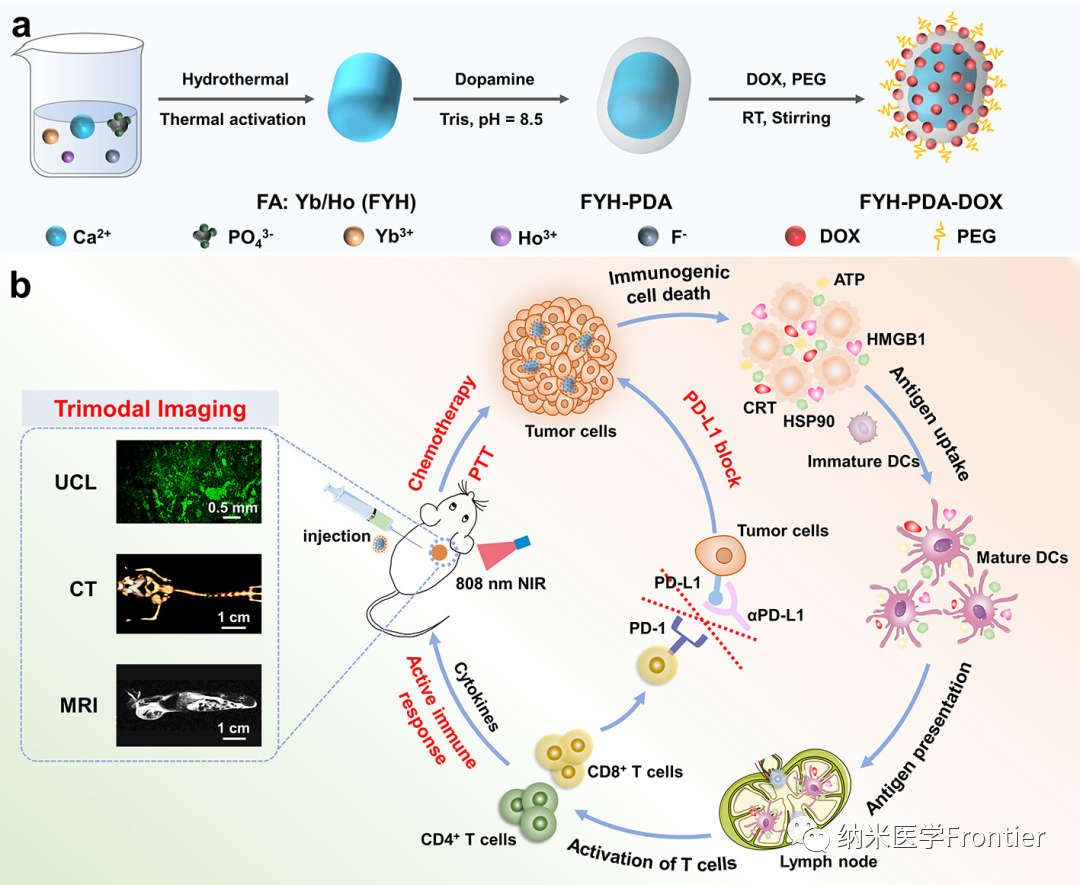
pH/NIR response UCNP/PDA/DOX integrated diagnosis and treatment
Nanoplatforms are a promising approach for tumor imaging and therapy, but it is difficult to realize precise tumor nanomedicine for multimodal imaging and synergistic therapy.
The researchers prepared a rare-earth ion-doped upconversion hydroxyapatite (FYH) nanoparticle, which can produce photothermal effect and simultaneously release anticancer drugs (DOX) and polydopamine (PDA) under the action of near-infrared laser light.
Experimental results show that this nanoparticle can diagnose tumors through up-conversion luminescence, computed tomography and magnetic resonance imaging, and eliminate tumors through photothermal-chemical-immune synergistic therapy, and has good biocompatibility and anti-tumor ability. This provides a new strategy for tumor diagnosis and treatment.
pH/GSH response to Ce6/MnO2 for PTT/CDT therapy
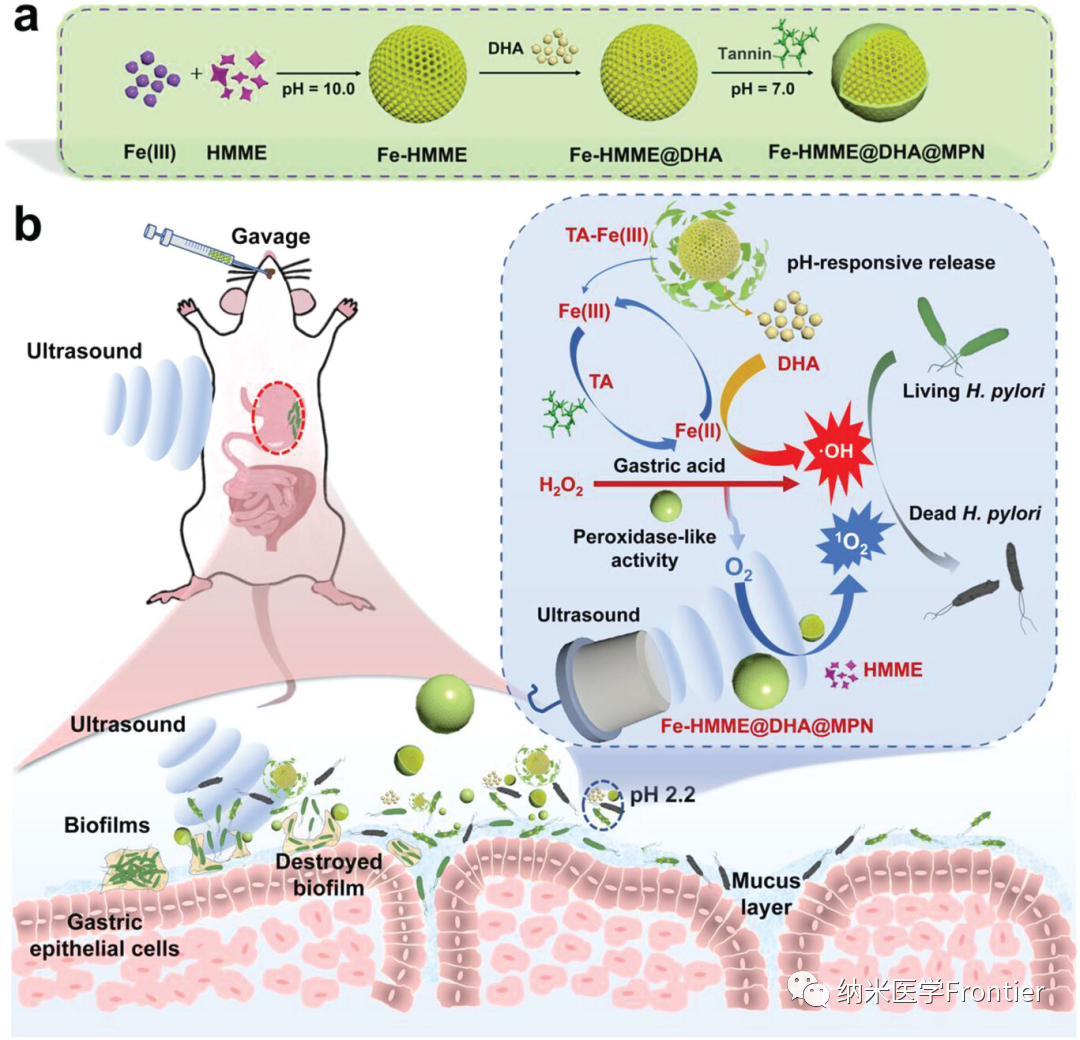
Helicobacter pylori, a common stomach bacterium that can cause diseases such as stomach cancer, is resistant to antibiotics and difficult to treat.
The researchers prepared a nanoparticle based on metal polyphenol network (MPN), metal-organic nanostructure (Fe-HMME) and dihydroartemisinin (DHA), which can generate reactive oxygen species (ROS) to kill Helicobacter pylori under the action of ultrasound and gastric acid.
Experimental results showed that the nanoparticles could effectively eliminate multidrug-resistant H. pylori and biofilms, while having no noticeable effect on normal gut microbiota. This provides a new strategy for the treatment of Helicobacter pylori infection.
18915694570