

Liposomes: a triple
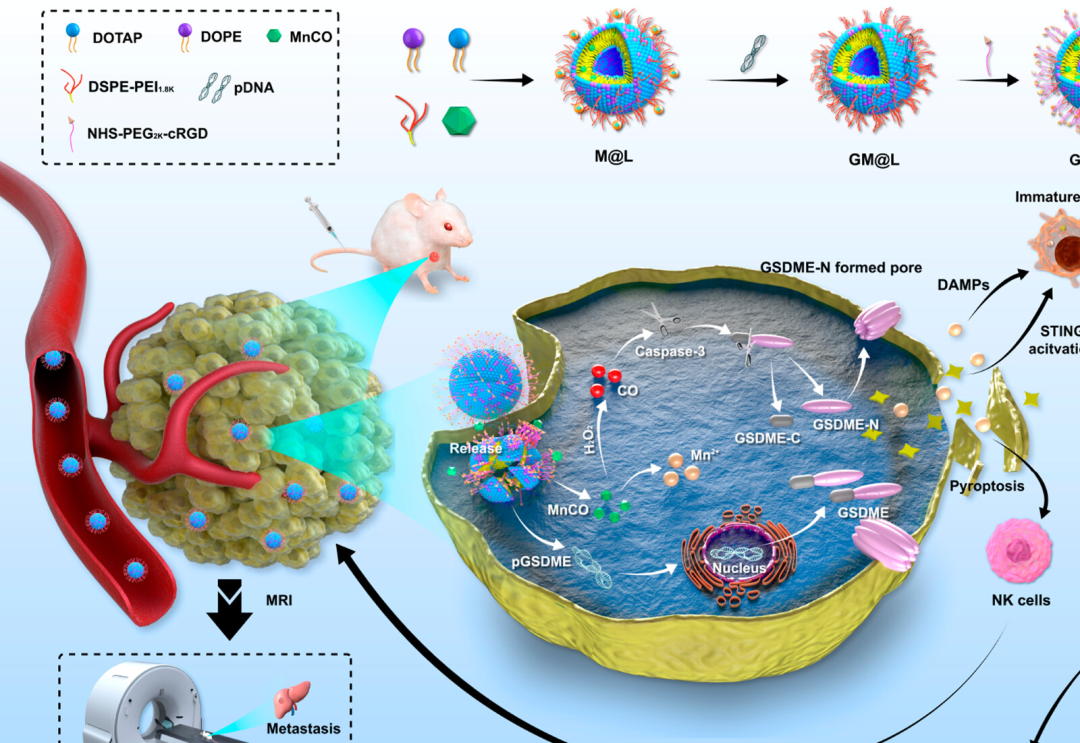
MnCO@Liposome-pDNA/RGD
(TNBC) is a highly aggressive cancer that lacks effective targeted therapies. Therefore, the development of novel therapeutic strategies is urgently needed. Based on this, a nanoliposome (GM@LR) was designed to co-deliver gsdme gene and manganese carbonyl (MnCO) into TNBC cells. GSDME is a thermolytic executive protein that converts apoptosis into pyroptosis, a pro-inflammatory form of programmed cell death. MnCO is a metal carbonyl compound that can be decomposed into CO and Mn2+ in the presence of H2O2. CO is a biologically active molecule that can activate caspase-3 and cleave the expressed gsdme, thereby causing pyroptosis in TNBC cells. Pyroptotic cells release their cellular contents, activating the immune response. Mn2+ is a metal ion that can activate the STING signaling pathway and promote the maturation and migration of dendritic cells (DCs). Mature DCs can activate cytotoxic lymphocytes (CTLs) to kill tumor cells. Mn2+ can also be used as an MRI contrast agent to detect the location and extent of tumor metastasis. The experimental results show that GM@LR nanomedicine can effectively inhibit tumor growth and metastasis through pyroptosis and STING activation combined with immunotherapy, which provides a new strategy for the treatment of TNBC.
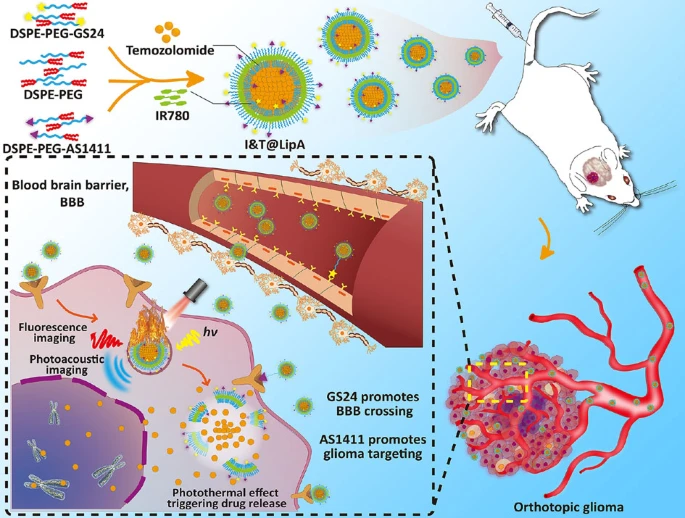
Targeted liposome chemotherapy/photothermal therapy for glioma
Glioma is a common malignant brain tumor that poses serious hazards to human health. The treatment of glioma is very difficult, one of the main reasons is tumor hypoxia. Tumor hypoxia not only promotes the proliferation, invasion and metastasis of tumor cells, but also leads to the resistance of tumor cells to the first-line chemotherapy drug Temozolomide (TMZ). Therefore, developing a therapeutic strategy that can overcome tumor hypoxia and TMZ resistance is urgently needed. In this work, an aptamer-functionalized liposome (Apt-Lip) was designed to co-encapsulate TMZ and the photothermal agent IR780. Apt-Lip has the following advantages: (1) It can cross the blood-brain barrier (BBB) and effectively deliver drugs to the brain; (2) It can use aptamers to bind to specific receptors on the surface of glioma cells to achieve active targeting; (3) It can use the fluorescence and photoacoustic signals of IR780 to achieve dual-modal imaging of tumors; (4) It can use the photothermal effect of IR780 to induce local temperature rises in tumors by near-infrared lasers to achieve photothermal therapy; Chemotherapy effects of TMZ. Our experimental results show that Apt-Lip can effectively inhibit the growth and metastasis of glioma in situ through chemical/photothermal synergistic treatment, and can reverse the drug resistance of glioma cells to TMZ. This chemo/photothermal synergistic effect of liposomes on glioma is demonstrated by their ability to target glioma in situ, alleviate tumor hypoxia and thus reverse glioma cell resistance to TMZ.
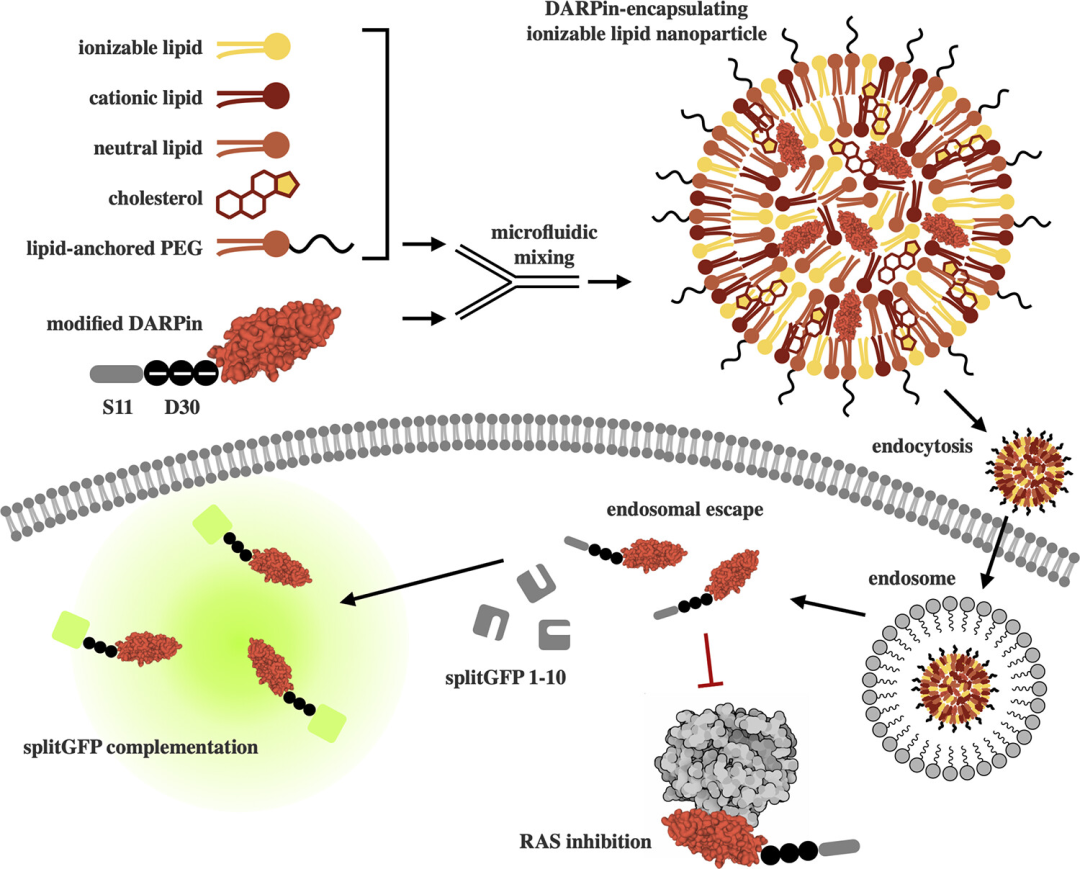
Liposome delivery of K27-D30 to the cytosol
Mutated RAS proteins are potent oncogenic drivers that have long been considered "undruggable." Although RAS-targeted therapies have recently shown promise, there is still a clinical need for RAS inhibitors with more targets. Here, a lipid nanoparticle (LNP) platform was developed to efficiently deliver a small protein, K27-D30, into cells and in vivo. K27-D30 is a protein that inhibits the oncogenic factor of RAS. The LNP platform can protect K27-D30 from degradation, facilitate its entry into the cytoplasm of cells, and inhibit the growth of liver cancer in vivo. It provides a new strategy for RAS targeted therapy and expands a new field for the application of LNP.
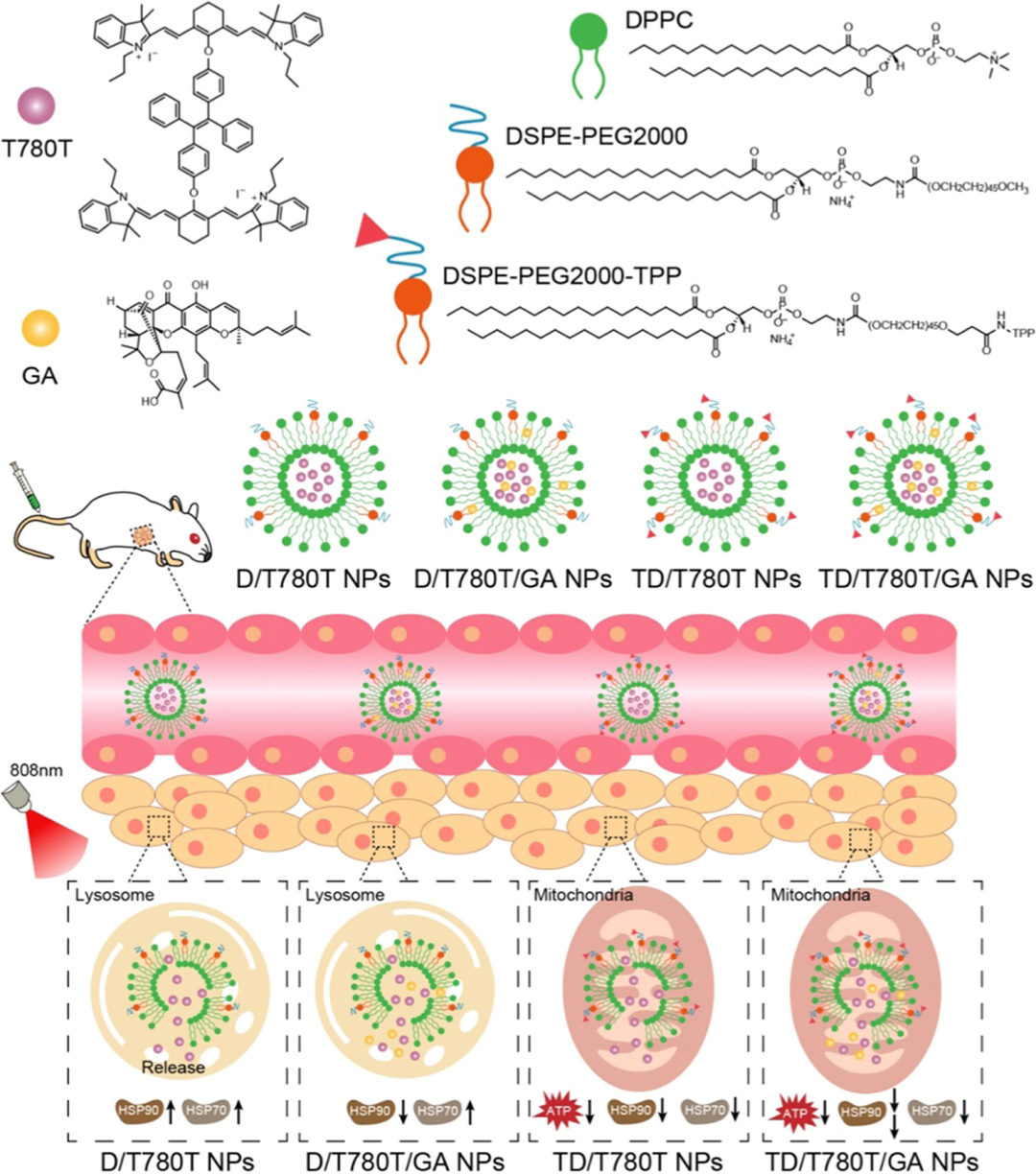
Low-temperature PTT targeting mitochondrial liposomes to fight cancer
Photothermal therapy (PTT) is a treatment that uses light absorbers to convert light energy into heat, thereby inducing tumor cell death. However, conventional PTT requires high temperature (>50°C) to effectively kill tumor cells, which may cause normal tissue damage and side effects. Therefore, low-temperature PTT (< 45°C), as a milder and safer PTT strategy, has received extensive attention in recent years. Low-temperature PTT can achieve anti-tumor effect by inducing apoptosis, autophagy, necrosis or immune response of tumor cells. However, low-temperature PTT also faces some challenges, one of which is the adaptive response of tumor cells to thermal stimuli. When tumor cells are subjected to hypothermic PTT, they overexpress some heat shock proteins (HSPs), specifically HSP70 and HSP90. These HSPs can protect tumor cells from thermal damage, enhance tumor cell survival and drug resistance, and suppress tumor cell death and immune responses. Therefore, inhibiting the function of these HSPs is an important strategy for improving the efficacy of hypothermic PTT and developing novel cancer therapeutics. Here, four T780T-containing thermosensitive nanoparticles were designed to disrupt the energy supply of HSP expression using their TPP-based mitochondrial targeting. This design proposes for the first time the utilization and elucidation of the mitochondrial targeting mechanism of T780T-containing NPs synergistically with HSP90 inhibition by GA for efficient low-temperature PTT. This work not only provides a new way for dual inhibition of HSP70 and HSP90, but also opens up a new way for low-temperature PTT of tumors.
GSH/ROS-responsive liposome SDT in the treatment of fine carcinoma
Nanomedicines combining chemotherapy and sonodynamic therapy (SDT) have great potential in the treatment of squamous cell carcinoma. However, the therapeutic efficacy of non-invasive SDT is severely limited because the production of reactive oxygen species (ROS) by sonosensitizers is highly dependent on the level of excess intracellular glutathione (GSH) in tumor cells. To overcome this hurdle, an erythrocyte membrane-camouflaged nanodrug was developed to co-deliver sonosensitizers and chemotherapeutics into squamous cell carcinoma cells. This nanomedicine can generate reactive oxygen species using ultrasound stimulation, kill tumor cells, and accelerate the release of chemotherapy drugs. At the same time, this nanomedicine can also deplete glutathione in tumor cells and prevent reactive oxygen species from being removed. This nanomedicine can realize the synergistic effect of chemotherapy and sonodynamic therapy to effectively inhibit the growth of squamous cell carcinoma.
18915694570
Previous: Triple Response Nanopl
Next: Selenium Nanoparticles