Research Background
Power storage systems have received great attention from the scientific community in the past few decades because of the widespread use and irreplaceable role of electricity in our daily lives. Batteries have been widely used in recent years due to their high performance and reasonable price. However, supercapacitors, also known as electric double-layer capacitors, are playing an increasingly important role in the power storage market and scientific research. Supercapacitors have great advantages in fast energy transmission and collection, but their lower energy density is always unsatisfactory. Therefore, it is very important to increase the energy density of supercapacitors while ensuring power density.
Similar to batteries, the electrochemical performance of a supercapacitor device is mainly determined by its electrodes and electrolyte. In terms of electrodes, recent studies have proven that transition metal-based materials and low-dimensional system materials are excellent electrode materials for power storage systems, thanks to their excellent electrical properties and multiple oxidation states. Two-dimensional transition metal carbides and nitrides, also known as MXenes, are typical representatives of this type of material. Due to the weak reaction between MXene layers and the presence of hydrophilic functional groups on the surface, electrolyte ions can be easily inserted into MXenes. , Which greatly improves the electrochemical performance. Compared with traditional transition metal oxides, conductive polymers and oxidatively active organic molecules, MXene electrodes not only have considerable capacity but also have better cycle stability.
Choosing an appropriate electrode/electrolyte interface is very important for achieving high energy density power storage devices. A large number of experimental studies have focused on the energy storage mechanism when MXenes are matched with different electrolytes. Among the many calculation methods, molecular dynamics (MD) simulation is a more effective way to deeply explore the mechanism of energy storage and the design of supercapacitors.
Introduction to Achievements
Recently, Professor Patrice Simon and Professor Céline Merlet of the University of Toulouse in France published a research paper titled: Effects of functional groups and anion size on the charging mechanisms in layered electrode materials in the international high-level academic journal Energy Storage Materials, which was systematically and deeply passed. Molecular dynamics simulation studies the effect of functional group and anion size on charge storage.
Graphic guide
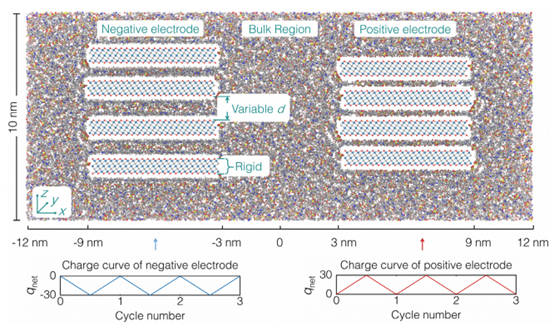
Figure 1. Typical MXene-based simulation.
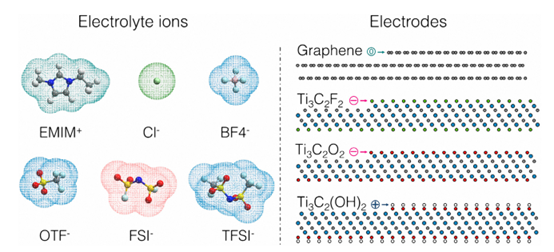
Figure 2. The chemical structure of electrolyte ions studied in this article.
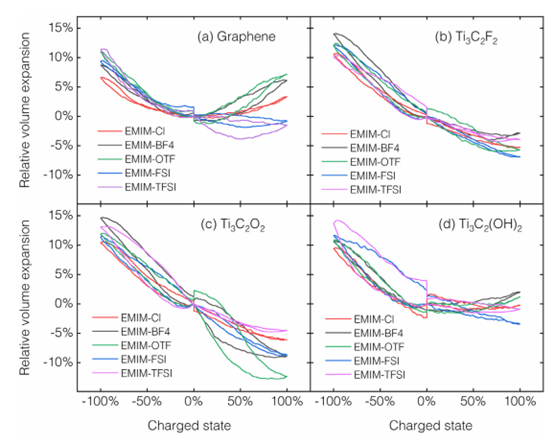
Figure 3. The relative volume expansion and contraction of all systems studied in this article.
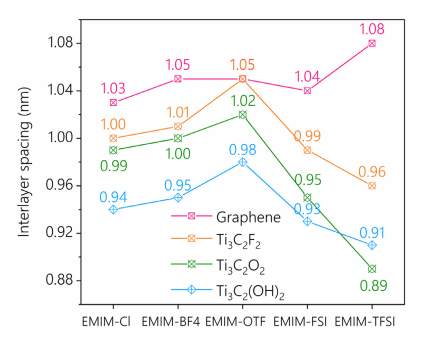
Figure 4. The initial equilibrium layer spacing of different electrode materials and electrolyte.
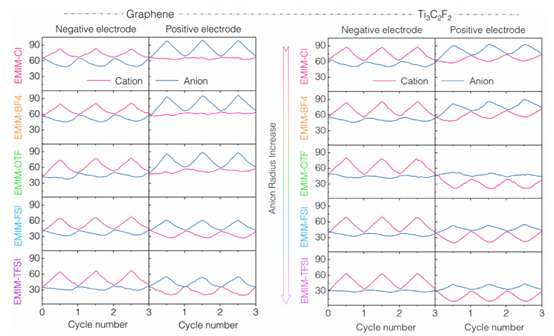
Figure 5. The evolution of the number of ions in graphene and Ti3C2F2 electrodes during charge and discharge.
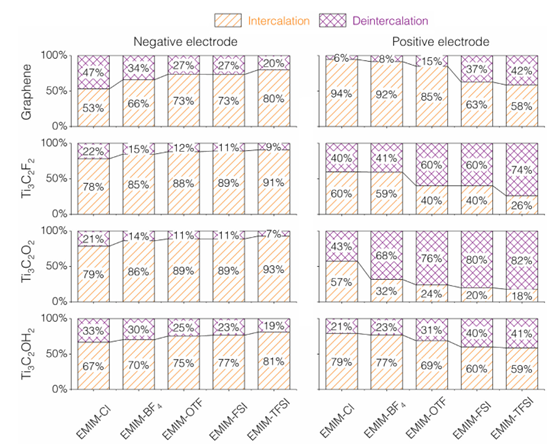
Figure 6. The embedding and embedding ratios of all systems studied in this paper under the maximum state of charge.
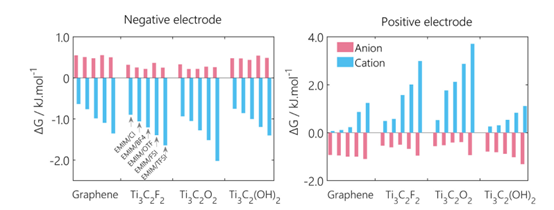
Figure 7. Comparison of different free energies of the studied systems.
Summary of this article
In this paper, molecular dynamics simulation methods are used to systematically study the effect of functional groups on anion size on charge storage. A typical two-dimensional material, graphene and three MXenes (Ti3C2F2, Ti3C2O2, Ti3C2(OH)2) and five different ionic liquids are studied. Studies have found that for all electrode materials and electrolytes, the electrodes will expand when they are negatively charged and have little dependence on the anion type. When the electrode is positively charged, the volume change is more complicated, and the anion size does not have any specific trend. In some specific cases, such as FSI- and TFSI-, the reorientation of ions will also affect the interlayer volume. The simulation results show that the charging mechanism (intercalation, exchange, intercalation) changes continuously with the size of the anion, and is closely related to the electrode surface under neutral conditions.
Literature link:
https://doi.org/10.1016/j.ensm.2020.08.030
This information is sourced from the Internet for academic exchanges only. If there is any infringement, please contact us to delete it immediately.