

Materials Report: Application research of anti-cancer nano-drug co-delivery system
1. Article overview
With the changes in the modern living environment and diet, the incidence and mortality of tumors are on the rise. In 2018 alone, there were 18.1 million new cancer cases worldwide and 9.6 million deaths, including new cases and deaths in Asia Accounted for 48.4% and 57.3%. In addition to conventional chemotherapy, radiotherapy, and surgical treatment, targeted therapy has also achieved good results for different tumor targets at the organ, tissue and molecular level. Among them, the nano-preparation targeting technology uses nanoparticles as a carrier to control the movement and release of drugs in the body, specifically bind to carcinogenic sites and play a role, and effectively improve the distribution of drugs in the body. At present, some nano-drugs have been used in clinical treatment, such as polyethylene glycol-modified liposomal adriamycin Doxil, micellized paclitaxel nano-drug Genexol®-PM injection [4] and liposomal vincristine Marqibo® [5] etc. However, due to the heterogeneity of tumors, during the growth of tumor cells, daughter cell genes change, which makes tumor cell growth rate, invasion ability, drug sensitivity and other aspects different, and single-embedded drug treatment range Due to limited resistance to drug resistance, scientists use nanocarriers to co-deliver anti-cancer drugs of different properties, reduce the toxic and side effects of a single drug in large doses, and strengthen the killing and inhibiting effect on cancer cells through multiple metabolic pathways, and to a certain extent Can reverse multidrug resistance.
Two, graphic guide
With the changes in the modern living environment and diet, the incidence and mortality of tumors are on the rise. In 2018 alone, there were 18.1 million new cancer cases worldwide and 9.6 million deaths, including new cases and deaths in Asia Accounted for 48.4% and 57.3%. In addition to conventional chemotherapy, radiotherapy, and surgical treatment, targeted therapy has also achieved good results for different tumor targets at the organ, tissue and molecular level. Among them, the nano-preparation targeting technology uses nanoparticles as a carrier to control the movement and release of drugs in the body, specifically bind to carcinogenic sites and play a role, and effectively improve the distribution of drugs in the body. At present, some nano-drugs have been used in clinical treatment, such as polyethylene glycol-modified liposomal adriamycin Doxil, micellized paclitaxel nano-drug Genexol®-PM injection [4] and liposomal vincristine Marqibo® [5] etc. However, due to the heterogeneity of tumors, during the growth of tumor cells, daughter cell genes change, which makes tumor cell growth rate, invasion ability, drug sensitivity and other aspects different, and single-embedded drug treatment range Due to limited resistance to drug resistance, scientists use nanocarriers to co-deliver anti-cancer drugs of different properties, reduce the toxic and side effects of a single drug in large doses, and strengthen the killing and inhibiting effect on cancer cells through multiple metabolic pathways, and to a certain extent Can reverse multidrug resistance.
Two, graphic guide
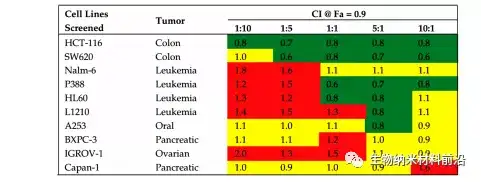
Figure 1. Synergistic heat map of cytarabine and daunorubicin liposomes (CPX-351).
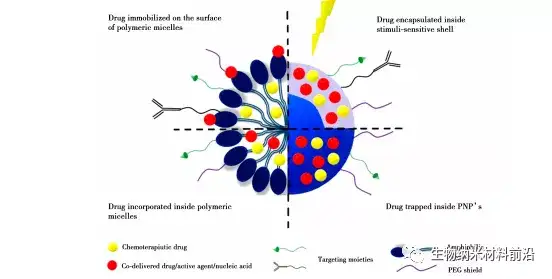
Figure 2. Co-delivery system polymer nanoparticle drug-loaded form.
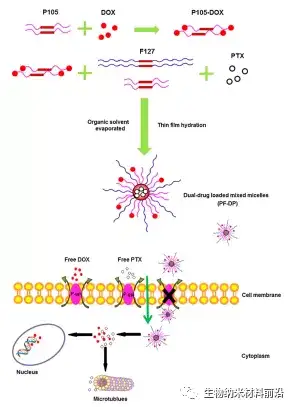
Figure 3. Schematic diagram of the synergistic effect and reversal of multidrug resistance of dual drug-loaded mixed micelles.
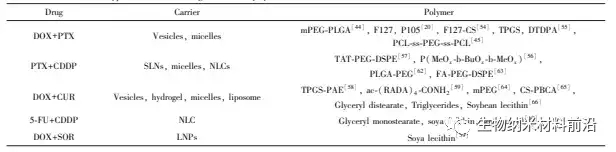
Figure 4. Types of co-delivered anticancer drug combinations.
3. Full text summary
Cancer is difficult to cure because it involves a variety of complex mechanisms and is easy to spread and metastasize. A single drug can only block a certain signaling pathway, and it is easy to produce drug resistance and reduce the efficacy. Therefore, it may miss the best treatment period to control cancer cell metastasis. The use of an efficient co-delivery system can not only improve the therapeutic effect of tumors through the synergy between drugs, but also reduce the dosage of a single drug and reduce toxic and side effects. Nano-carriers can help anti-tumor drugs overcome the problems of poor solubility and stability while loading Drugs of different solubility can improve the efficiency of delivery and cell entry, and can resist the degradation of lysosomes or other enzymes, thereby prolonging the circulation time. At present, the most researched is the co-delivery of the two drugs. The problems that still need to be solved include whether the nanoparticles whose particle size has increased after the two drugs are embedded can be taken up by cells instead of by the endothelial reticulum system and the endothelial reticulum system. Phagocyte capture; whether co-delivered nano-drugs can release two active ingredients at the same time after entering the body, and if the metabolic degradation rate is too different, the optimal dose ratio cannot be maintained; how to ensure that the effect of co-delivered drugs is synergistic, the ideal situation is Combinations of drugs with different mechanisms of action can enhance the efficacy, but studies on doxorubicin vincristine liposomes have proved that vincristine accumulates during mitosis and prevents cells from entering the S phase of the next cell cycle, while the maximum effect of doxorubicin occurs In the early stage of S phase, vincristine may inhibit the activity of doxorubicin. In addition to the combined application of two chemotherapeutic drugs, the co-delivery of chemotherapeutic drugs with plasmid DNA, siRNA, and polypeptides has also been extensively studied. Biomolecules are embedded in nanocarriers or bonded to the surface of the carrier to target tumor cells and act on Multidrug resistance-related genes or proteins, such as multidrug resistance gene (MDR1) and its encoded glycoprotein (P-glycoprotein, P-GP) mediated resistance, multidrug resistance-related protein (MRP), Lung resistance protein (LRP), etc., can effectively reverse the multidrug resistance of tumors. In addition, there is also the integration of diagnostic agents into nano-carriers and co-delivery of chemotherapeutic drugs, which are used in tumor diagnosis and cancer cell metastasis monitoring, etc., to achieve the dual function of treatment and monitoring.
Article link:
http://n.ustb.edu.cn
This information is sourced from the Internet for academic exchanges only. If there is any infringement, please contact us to delete it immediately.
3. Full text summary
Cancer is difficult to cure because it involves a variety of complex mechanisms and is easy to spread and metastasize. A single drug can only block a certain signaling pathway, and it is easy to produce drug resistance and reduce the efficacy. Therefore, it may miss the best treatment period to control cancer cell metastasis. The use of an efficient co-delivery system can not only improve the therapeutic effect of tumors through the synergy between drugs, but also reduce the dosage of a single drug and reduce toxic and side effects. Nano-carriers can help anti-tumor drugs overcome the problems of poor solubility and stability while loading Drugs of different solubility can improve the efficiency of delivery and cell entry, and can resist the degradation of lysosomes or other enzymes, thereby prolonging the circulation time. At present, the most researched is the co-delivery of the two drugs. The problems that still need to be solved include whether the nanoparticles whose particle size has increased after the two drugs are embedded can be taken up by cells instead of by the endothelial reticulum system and the endothelial reticulum system. Phagocyte capture; whether co-delivered nano-drugs can release two active ingredients at the same time after entering the body, and if the metabolic degradation rate is too different, the optimal dose ratio cannot be maintained; how to ensure that the effect of co-delivered drugs is synergistic, the ideal situation is Combinations of drugs with different mechanisms of action can enhance the efficacy, but studies on doxorubicin vincristine liposomes have proved that vincristine accumulates during mitosis and prevents cells from entering the S phase of the next cell cycle, while the maximum effect of doxorubicin occurs In the early stage of S phase, vincristine may inhibit the activity of doxorubicin. In addition to the combined application of two chemotherapeutic drugs, the co-delivery of chemotherapeutic drugs with plasmid DNA, siRNA, and polypeptides has also been extensively studied. Biomolecules are embedded in nanocarriers or bonded to the surface of the carrier to target tumor cells and act on Multidrug resistance-related genes or proteins, such as multidrug resistance gene (MDR1) and its encoded glycoprotein (P-glycoprotein, P-GP) mediated resistance, multidrug resistance-related protein (MRP), Lung resistance protein (LRP), etc., can effectively reverse the multidrug resistance of tumors. In addition, there is also the integration of diagnostic agents into nano-carriers and co-delivery of chemotherapeutic drugs, which are used in tumor diagnosis and cancer cell metastasis monitoring, etc., to achieve the dual function of treatment and monitoring.
Article link:
http://n.ustb.edu.cn
This information is sourced from the Internet for academic exchanges only. If there is any infringement, please contact us to delete it immediately.
18915694570
Previous: AFM: Light-driven micr